
Lessons drawn from repairing a 40 year old bike
Date:
[]
Recently in my quest to become more aerobically fit I've took up jogging. And then I've also taken an interest in cycling as well. Which was excellent timing due to the current fuel crisis.
Now my reinvigorated interest in cycling had a small problem. The only bike I had was a Giant duel suspension mountain bike. Which I've had for 15 years and I've never been really inspired to travel long distances on it. It looks great. Just didn't feel great. And the rear suspension was a bit too energy sapping, which I realised when riding other bikes that only had front suspension.
But then my Dad gave me this old steel frame mountain bike. Which he has had for like 35 years. A KHS montana pro. He stored it out in leaking sheds. Never really used it much as far as I can remember. He left it out in the rain once for so long that the chain turned into a stiff mass of rust which was then resurrected with WD-40 and hard work. So when he gave it to me it wasn't really in the greatest of conditions.
So I started working on making this old thing safe to ride. The first thing I did was taking advantage of the local indestructible rubbish collection that was happening at the time in my area. Once a year the local council collects unwanted stuff off the nature strip. And some people decide that the stuff isn't unwanted. Like me. Who collected two bikes for parts.
I removed the cracked 40 year old tyres off the bike and replaced them with the tyres off another bike. I got better brake pads off another bike, and also a rear wheel as the original one had broken spokes. And for now it was easier to replace the whole wheel than replace the spokes. The front cantilever brakes needed adjusting to make them more powerful and sensitive. Which mostly just involves loosening the screws and then tightening them up again when everything is in the perfect position. The same went for the rear brakes. Which are under the frame on this model.
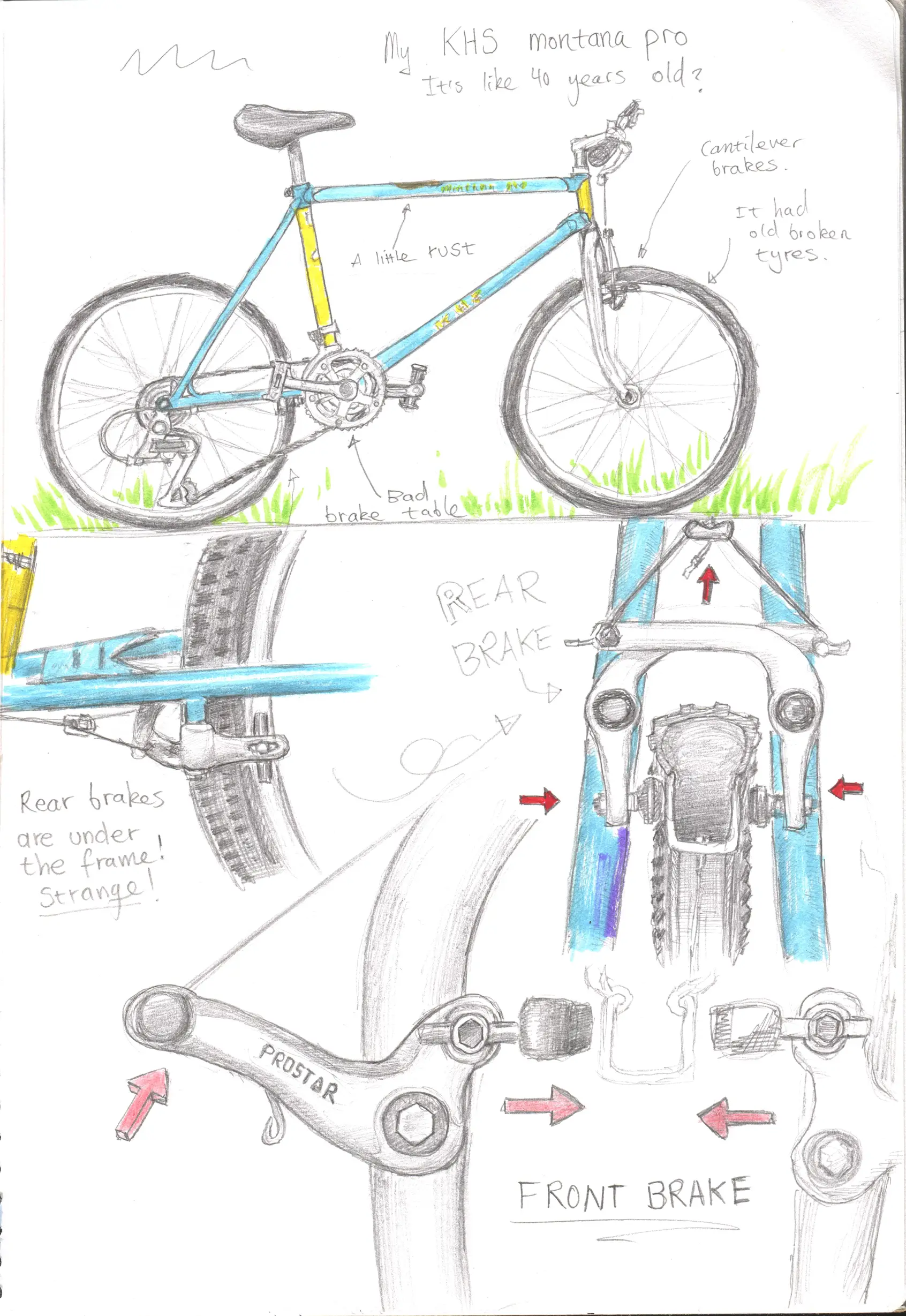
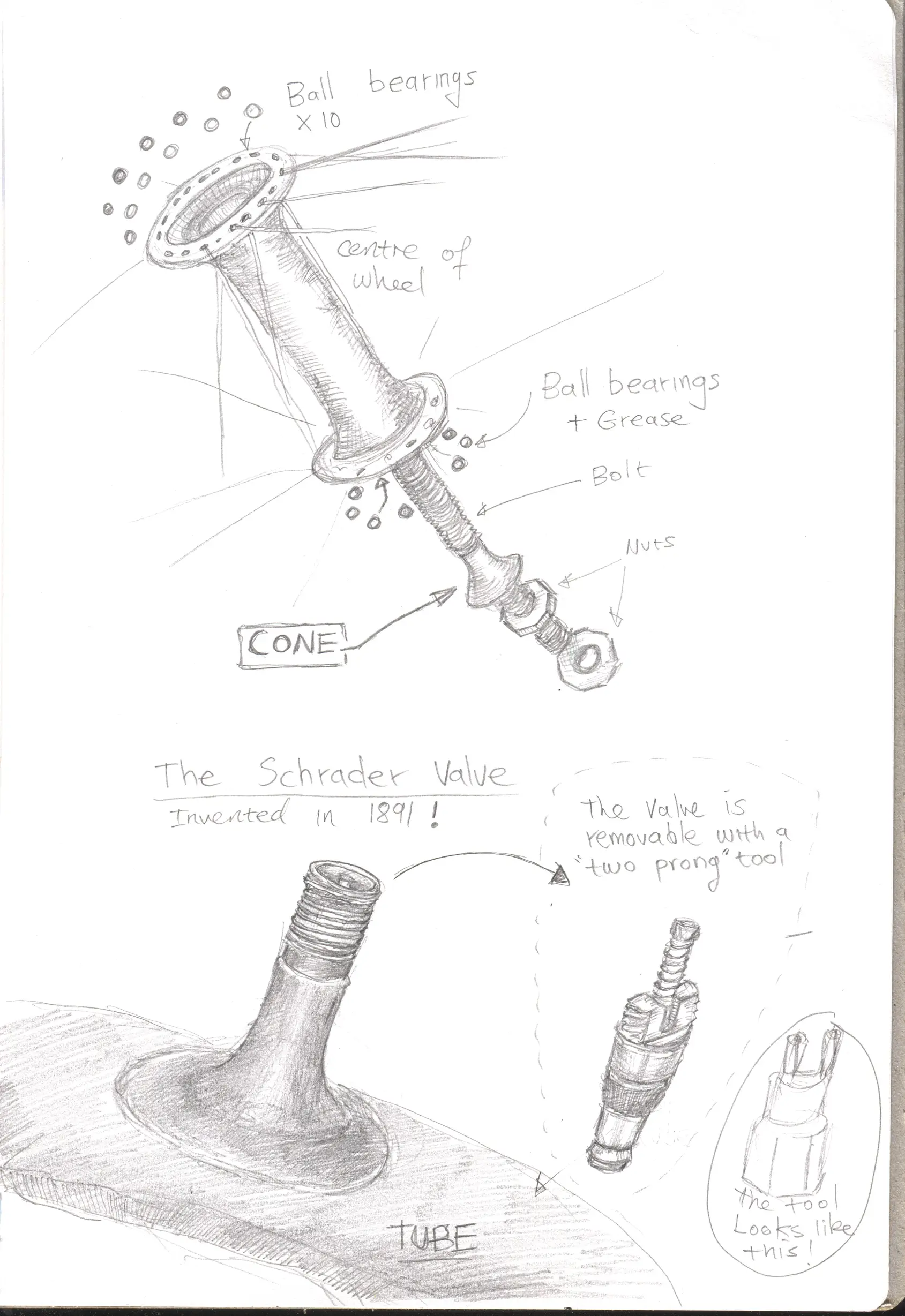
While the wheels were off I pulled apart the bearings. Which was an interesting experience as I didn't at first expect the ball bearings to just fall out. These old bikes use a cup and cone ball bearing system. So the bolt that runs through the wheel holds a two cones pointing inwards on each side. Which holds the ball bearings in place. So after dissembling the bearings and cleaning out the ancient black grease which wasn't doing its job. I put new grease in. Then I tightened the bolts which hold the cones in place. If you tighten them too much you'll put too much pressure on the ball bearings and the wheel won't turn very well. Too little and the wheel will wobble. After some fine adjustment these wheels spin around forever.
I also bought some new brake cables. 1.5mm MTB style. As the rear brake cable was frayed.
The tubes which I'm currently using came with the bike. No idea how old they are. But they seem to hold air very well. Except one of them was leaking out through the valve. In my ignorance I thought I would have to replace the whole tube but the valves are designed to be removed and replaced. You can use a two pronged tool, like on the end of a screwdriver, to unscrew the old valve. So I just swapped the old valve with another one I took from a broken tube.
The valves on these tubes are the same ones that cars use. It's called a Schrader Valve. And it was invented in 1891. And I just found it amazing that we are all using a unchanged valve standard from the late 1800's.
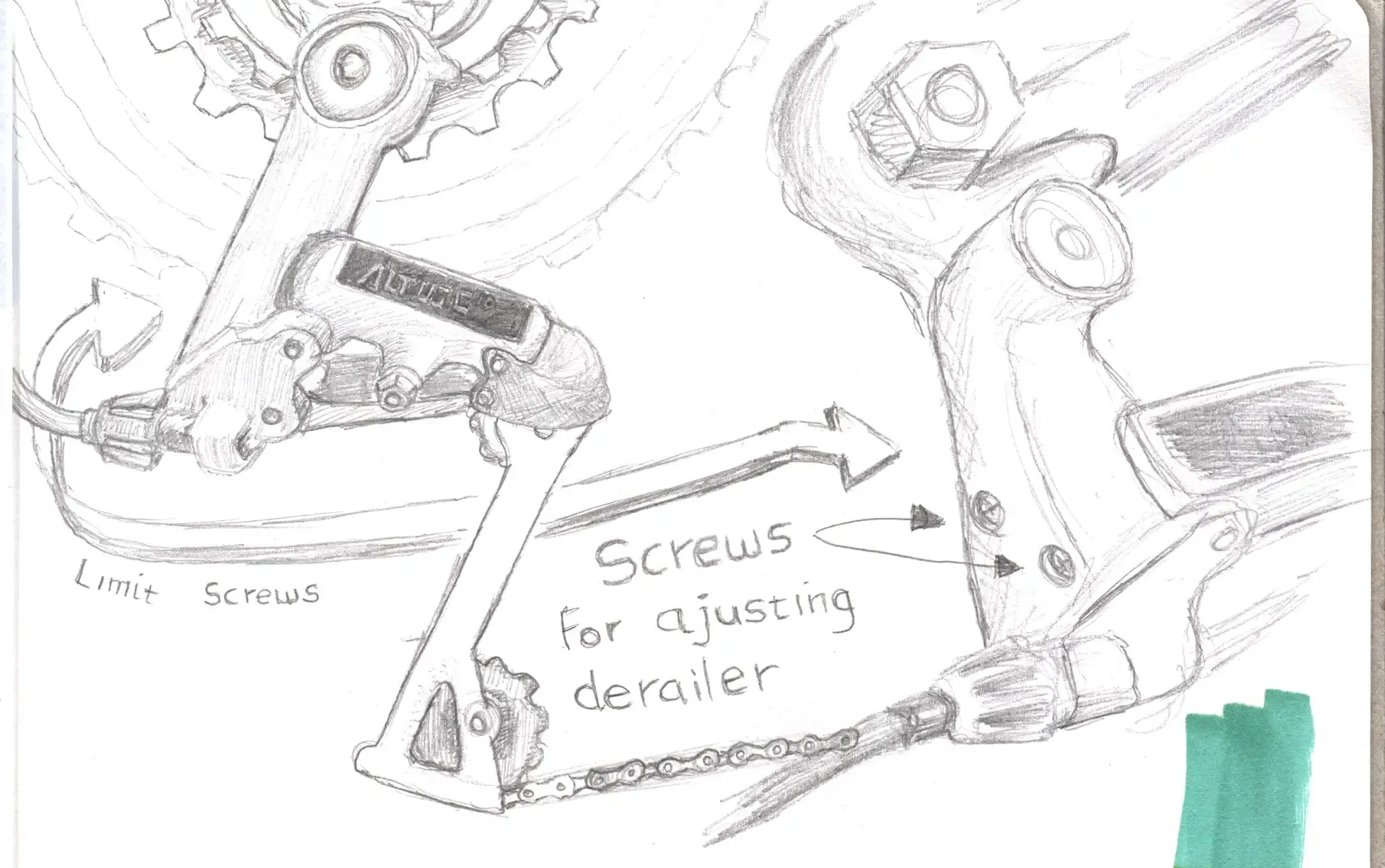
One of the last things I did before I started riding it was adjust the limiter screws on the derailers. So the chain doesn't get pushed off the cassette. The gearing on this bike isn't using indexing at the moment as I turned that off. Because I changed the cassette along with rear wheel which has one cog less on it. This means that it's just a friction shifting for now. So I just gently push the levers until the chain lands on the right gear.
Then I put a bit off rust kill paint on the thin surface rust on the frame. One day I'll put some proper paint on it.
So that is a summary of my journey in learning some of the basics of bicycle mechanics.
What did I learn from this?
I've ridden lots of different bikes. I've rented modern mountain bikes with hydraulic disk brakes and high end Shimano shifters. I have a nice Giant duel suspension mountain bike which a rear air shock. Lots of different and increasingly complex bicycle technology has been invented over the last 40 years. And after riding this old bike for a few hundred kilometers I've come to the conclusion that I don't need any of it. I thought I did.
The duel suspension bike for example. The only so called suspension this old bike has is the slight flex of the steel frame. I've been riding it over tree roots. Down poorly maintained tracks down steep hills. On dirt roads etc etc. Have my bones been rattled to pieces? No. It's only a little bumpy at the worst. I thought I need a fancy duel suspension mountain bike for that kind of stuff. But an ancient steel frame with no suspension at all is perfectly acceptable. In fact for energy efficiently not having suspension is far better. As your not bouncing up and down tiny amounts as you peddle. So now I'm just confused as to why I ever thought I needed so much suspension? My giant mountain bike clearly is modeled after some other bike that was designed to be ridden off the top of a mountain and over a cliff. Over enormous death defying jumps. I'm not going to be doing that. I think I've been sold something so I can pretend to be someone that I'm not.
This old bike uses the old style cantilever rim brakes. I was lead to believe that only disk brakes were any good. But these good quality rim brakes are powerful enough. The only difference I feel when using them is I just need to pull on the levers harder. Which isn't a problem. Because I CAN pull on the levers harder. I used to think "Oh wow these hydraulic disk brakes are amazing as I can stop the bike with one finger," but why is that important? Do you only have one finger? Do you have the grip strength of a fish? Are cyclists scared of developing any upper body strength at all?
Indexed gear shifting? After using the friction shifters for a little while now I can say that they're fine. As long as I don't try and fling the chain from one side of the cassette to the other, which sometimes flings the chain right off. But I'd never tried to change 5 gears at once on index shifting anyway. So the gears work just fine. Just took a small amount of time to get used to.
So I can safely say that bicycle technology has been good enough for me for the last 40 years. I don't need the latest technology. In fact I prefer riding this bike than the other mountain bike I have. Which now just feels like I'm dragging around a collection of unnecessary technology which I'm not using to it's full potential. And I also have doubts if many modern bikes would be able to be repaired and used at the age of 40 years. And with maintenance I think I might be able to use this bike for decades to come.